
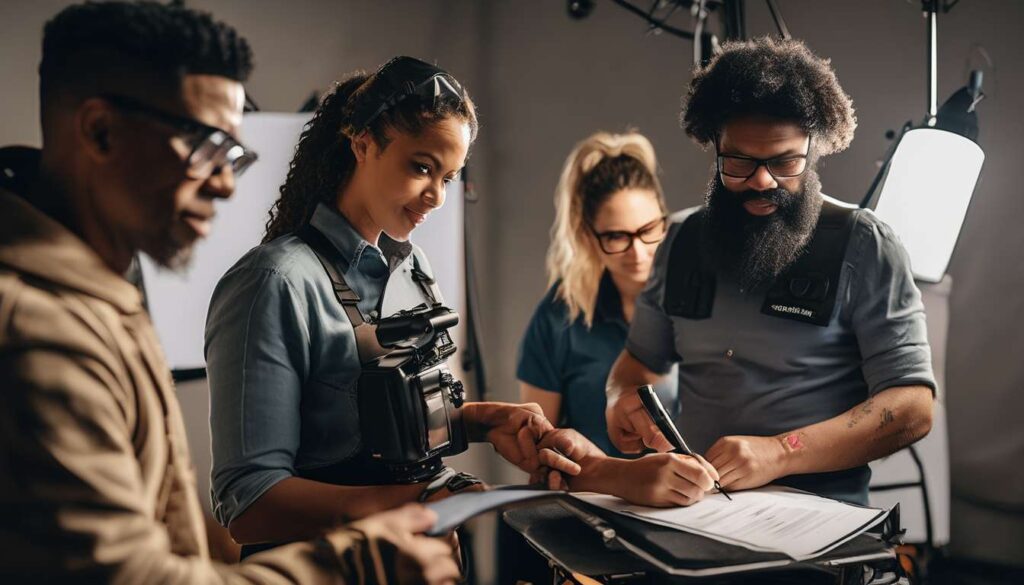
Vividly recall the moment when labor lawyers and sex-positive activists shared a panel at a workplace-safety conference — a scene that once would have seemed unlikely.
We trace the unexpected connection between traditional employment law and the adult film industry.
- Conversations about OSHA compliance, harassment policies, and unionization now sit alongside discussions of consent and sexual health.
We explore how frameworks developed for factories and offices are being adapted to studios where bodies, intimacy, and performance intersect.
- Performers, producers, and regulators are negotiating standards that respect both safety and autonomy.
- Practical questions arise, such as:
- What does it mean when PPE meets intimacy coaching?
- How do contracts incorporate STI testing protocols?
- How does collective bargaining address on-set boundaries?
Our reporting follows the people reshaping norms, the legal precedents being tested, and the pragmatic solutions emerging.
- Protections are expanding across adult picture studios as stakeholders adapt existing occupational-safety tools to a setting defined by intimacy and performance.
From Margins to Mainstream
Adult production work has shifted from marginal to recognized businesses that need clear workplace protections.
We build communities where everyone feels seen.
- This sense of belonging drives practical change:
- We implement consent protocols as non-negotiable standards.
- We require visible documentation of agreements.
- We normalize pause-and-review moments so performers can assert boundaries without stigma.
Performers form unions and worker collectives to amplify their voices.
- They negotiate fair contracts.
- They create shared enforcement mechanisms that keep studios accountable.
On-set health and safety are prioritized.
- Routine screenings are standard.
- Trained safety personnel are present.
- Transparent incident reporting treats concerns seriously rather than brushing them aside.
Business practices are aligned with community values.
- This makes studios safer and more sustainable for everyone involved.
- Newcomers are welcomed into frameworks that already protect veterans.
- Collaborative governance centers dignity, choice, and mutual care.
Legal Frameworks Applied
Scope: We’ll examine how existing labor, safety, and privacy laws apply to adult picture studios and where tailored regulations are still needed.
Employment law coverage: We review how general employment statutes cover wages, hours, and anti-discrimination protections, and we highlight gaps when work is informal or freelancers lack clear contractor status.
Consent protocols: We advocate for clear consent protocols codified so performers know rights around recording, distribution, and revocation where feasible.
Performer representation: We note that performer unions are increasingly essential to negotiate standards, enforce contracts, and provide a collective voice for gig workers who otherwise feel isolated.
Privacy and data handling: Privacy laws intersect with studio practices around data retention, image rights, and third-party sharing, requiring explicit contractual language and secure handling.
Health and safety frameworks: While OSHA-style frameworks can guide on-set health and safety, regulators must adapt inspection and reporting mechanisms to this industry’s specific contexts.
Collaborative rulemaking: We aim to foster belonging by urging collaborative rulemaking that includes:
- Performers
- Producers
- Legal experts
- Community advocates
so protections are practical, enforceable, and respectful of workers’ dignity.
Health and Safety Protocols
We’ll establish clear, enforceable health and safety protocols tailored to adult picture studios so performers and crew can work with predictable protections and access to prompt medical support.
We design on-set health and safety measures that cover infection control, first-aid readiness, privacy-respecting medical triage, and incident reporting.
We’ll train staff and performers on these procedures, reinforce them with checklists, and review them after every shoot.
We’ll coordinate with performer unions and local health providers to ensure access to testing, vaccinations, mental health counseling, and worker’s compensation when needed.
We’ll adopt standardized consent protocols for disclosure of health-related risks without encroaching on personal boundaries, and we’ll document agreement and emergency contacts securely.
We’ll assign a designated safety officer on every production who can pause work, call medical services, and file transparent reports.
We’ll commit to continuous improvement by collecting anonymous feedback, sharing lessons with peer studios, and updating protocols as medical guidance evolves so our community feels protected and respected.
Consent and Boundaries
We will establish clear, affirmative consent and boundary-setting practices that performers can invoke at any time, and we will document, respect, and enforce those limits throughout every production.
We create written consent protocols that are simple, specific, and revisited before each scene so everyone feels heard and secure.
We train crews to recognize verbal and nonverbal cues, and we designate safety personnel who pause action the moment a boundary is raised.
We include debriefs after shoots to address concerns, adjust future protocols, and support wellbeing.
We collaborate with performer unions to ensure contractual protections reflect real needs, including escalation procedures and neutral mediation.
We prioritize confidentiality, clear reporting channels, and accessible resources for mental and physical care.
We integrate consent protocols with on-set health and safety standards so respect becomes non-negotiable and routine.
We build an environment where belonging grows from mutual accountability, shared language, and practiced procedures so every person can work with dignity and trust.
Unionization Efforts Rising
More performers and crew are organizing to demand formal representation, better pay, and enforceable safety standards across adult picture studios.
We’re building networks that center mutual support and insist that consent protocols are standardized and respected.
As we join together, performer unions are moving from informal collectives to registered bodies that can:
- Bargain on behalf of members.
- File grievances.
- Secure paid sick leave and hazard protections.
We know belonging means having a voice, so we prioritize transparent processes for reporting and resolving issues without fear of retaliation.
Our organizing includes training and on-set safety measures such as:
- Clear emergency procedures.
- Routine access to medical resources.
- Training on health and safety protocols.
By aligning across roles — performers, camera operators, makeup and production staff — we amplify concerns and negotiate concrete changes rather than vague promises.
This rising unionization is practical: it’s about enforceable policies, fair compensation, and predictable working conditions.
We’re choosing solidarity to create workplaces where dignity, safety, and mutual respect are not optional but standard.
Producer and Performer Contracts
When we negotiate producer and performer contracts, we insist they clearly define scope of work, payment terms, rights to imagery, and enforceable safety and cancellation provisions.
We craft agreements that center mutual respect so everyone feels included and protected.
Contracts spell out consent protocols in plain language, specifying how consent is obtained, withdrawn, and documented during each scene.
We include clauses that reference on-set health and safety standards, emergency procedures, and provisions for independent medical attention without penalty.
We recognize performer unions and collective bargaining as tools that strengthen individual protections; our contracts accommodate union‑negotiated terms and clarify how union representation interacts with producer obligations.
Payment schedules, residuals, and crediting are explicit to prevent dispute and foster trust.
Cancellation and remediation terms are precise:
- 1. If safety or consent concerns arise, performers retain clear remedies and processes.
- 2. Procedures for suspension, investigation, and potential reinstatement or compensation are defined.
By keeping language direct and equitable, we build contracts that create belonging, reduce ambiguity, and make the workplace safer, fairer, and more sustainable for everyone involved.
Regulatory Challenges Ahead
As regulations evolve across jurisdictions, we’ll need to adapt our policies and contracts quickly to stay compliant while protecting performers’ rights and studio viability.
We recognize that changing law creates uncertainty, so we’ll approach these challenges together, sharing expertise and standardizing consent protocols to ensure clarity and mutual respect.
We’ll engage with performer unions proactively to align labor standards, negotiate fair terms, and bolster collective voice in rule‑making forums.
We’ll also prioritize on‑set health and safety as a nonnegotiable baseline, documenting practices that regulators can review and that communities can trust.
We’ll create adaptable policy templates, training modules, and reporting systems that accommodate local variations without fracturing our shared commitments.
We’ll advocate for sensible, evidence‑based regulation that balances risk reduction with creative and economic realities.
By collaborating with peers, legal advisors, and performers, we’ll build resilient compliance strategies that protect individuals and sustain studios, reinforcing that everyone in our community belongs and has a stake in safe, lawful workplaces.
Practical On-Set Innovations
Pilot practical on-set innovations to boost comfort, safety, and efficiency during shoots.
- We’ll trial modular privacy screens, real-time consent check-ins, and upgraded ventilation systems.
- We’ll pilot touchless equipment and other interventions that reduce airborne and surface risks.
Adopt clear, easy-to-follow consent protocols with digital check-ins.
- Digital check-ins will timestamp agreements and allow immediate changes.
- Protocols will be simple to revisit and update during a production.
Partner with performer unions to ensure protocols reflect lived experience.
- Unions and members can propose improvements without fear.
- Collaboration will help align tools and protocols with real-world needs.
Redesign operational flow to minimize unnecessary contact and support well-being.
- Revise call sheets and backstage layout to reduce points of close contact.
- Create dedicated quiet zones for breaks and decompression.
Standardize on-set health and safety audits and training.
- Implement checklists that producers sign off on during each shoot.
- Train crew in boundaries, proper PPE use, and emergency response procedures.
Share findings and create reusable resources for the community.
- Publish results and templates so smaller studios can adopt proven measures.
- Encourage community-wide adoption to raise baseline safety and professionalism.
Overarching goal: make sets more humane, professional, and sustainable.
- By collaborating across performers, crew, managers, and unions, we ensure everyone feels seen, heard, and protected.
How do studios handle off-set social media interactions and the potential for doxxing or harassment of performers?
We address off-set social media interactions and risks (doxxing, harassment) with clear policies and training.
We set clear policies that define acceptable off-set conduct, privacy expectations, and consequences for violations.
We train staff and performers on privacy best practices, recognizing threats, and how to report incidents.
We monitor for threats through regular checks of public channels and alerts for escalating behavior.
We support victims by providing:
- takedown assistance (platform reporting and content removal requests)
- legal referrals (trusted attorneys experienced in online harassment)
- security measures (anonymized contact information, limiting personal contact)
We foster a caring community and encourage boundaries by promoting respectful interaction, providing resources on setting and communicating limits, and supporting mental wellbeing.
We act quickly to de-escalate and protect wellbeing, responding promptly to reports, implementing safety measures, and prioritizing the physical and emotional safety of everyone involved.
What accommodations are available for performers with disabilities or chronic health conditions to ensure equitable participation?
Current Question: what accommodations are available for performers with disabilities or chronic health conditions to ensure equitable participation?
Core accommodations offered
- Adjustable set furniture (e.g., height-adjustable chairs, risers).
- Accessible entrances and routes.
- Flexible scheduling to reduce fatigue and allow medical appointments.
- Longer and more frequent breaks.
- Private quiet or rest spaces for recovery or medication.
Communication and sensory supports
- Captioning and real-time transcription services.
- Sign language interpreters.
- Sensory-friendly lighting and sound adjustments.
Health, safety, and physical supports
- Ergonomic supports (e.g., cushions, supports, adaptive tools).
- Medical escort options and on-call medical assistance.
Collaboration, confidentiality, and staff preparedness
- We collaborate with performers to tailor individualized accommodation plans.
- We honor confidentiality around health information.
- We train staff on disability awareness and accommodation procedures so everyone feels respected, safe, and fully included.
How are apprenticeships, mentorships, or career-transition programs structured to help performers move into directing, producing, or advocacy roles?
We structure apprenticeships and mentorships with clear pathways, hands-on projects, and flexible schedules so everyone feels welcome.
We pair performers with experienced directors or producers, set milestone-based curricula, and offer shadowing, co-producing, and credit-sharing opportunities.
We run workshops on budgeting, legal basics, and advocacy, plus paid transition stipends.
We foster peer support groups and ongoing feedback so members confidently move into directing, producing, or advocacy roles.
Conclusion
You’ve watched protections shift from the margins into everyday practice.
Legal frameworks, health protocols, and consent standards are now clearer and shaping shoots.
Performers are gaining bargaining power through organizing and tighter contracts.
Producers are balancing compliance with creativity.
You’ll face regulatory uncertainty, but practical on-set innovations keep safety and autonomy central.
As the industry evolves, you’ll keep pushing for rights that make adult production safer, fairer, and more professional.